
Choosing between hot and cold water cleaning equipment is one of the most common dilemmas I hear from facility teams across India. The right call can save lakhs over a machine's lifetime; the wrong one wastes detergent, labour, and time.
This guide breaks down exactly when a hot water high pressure cleaner earns its higher price tag, and when a simpler cold water unit does the job perfectly well.
Understanding High Pressure Cleaners in 2026
A high pressure cleaner removes dirt by pushing water through a pump at high force, often combined with detergent and heat. Three factors define performance: pressure, flow, and temperature.
Pressure (measured in bar) provides the mechanical punch to dislodge grime. Flow (litres per minute) determines how quickly you rinse the loosened dirt away. Temperature softens stubborn deposits like grease and fats so they release faster.
You will find these machines cleaning plant floors, heavy machinery, vehicle fleets, and food-contact surfaces every day. Picking the best high pressure cleaner depends entirely on what you clean and how often.
How Hot Water and Cold Water Cleaners Work Differently
Cleaning physics: temperature, pressure, and chemistry
Heat changes the chemistry of cleaning. Because hot water breaks down grease and oil faster, it cuts scrubbing time and reduces detergent use.
Cold water relies almost entirely on pressure and chemicals to do the work. For oily or fatty soils, that means more passes, more product, and more labour hours.
Typical use cases for cold water high pressure cleaner units
Use a cold water machine when the dirt is loose, dry, or non-greasy. Think dust, mud, sand, cement splatter, and general exterior grime.
These units are lighter, cheaper, and simpler to maintain. For many warehouses and open yards, that is more than enough.
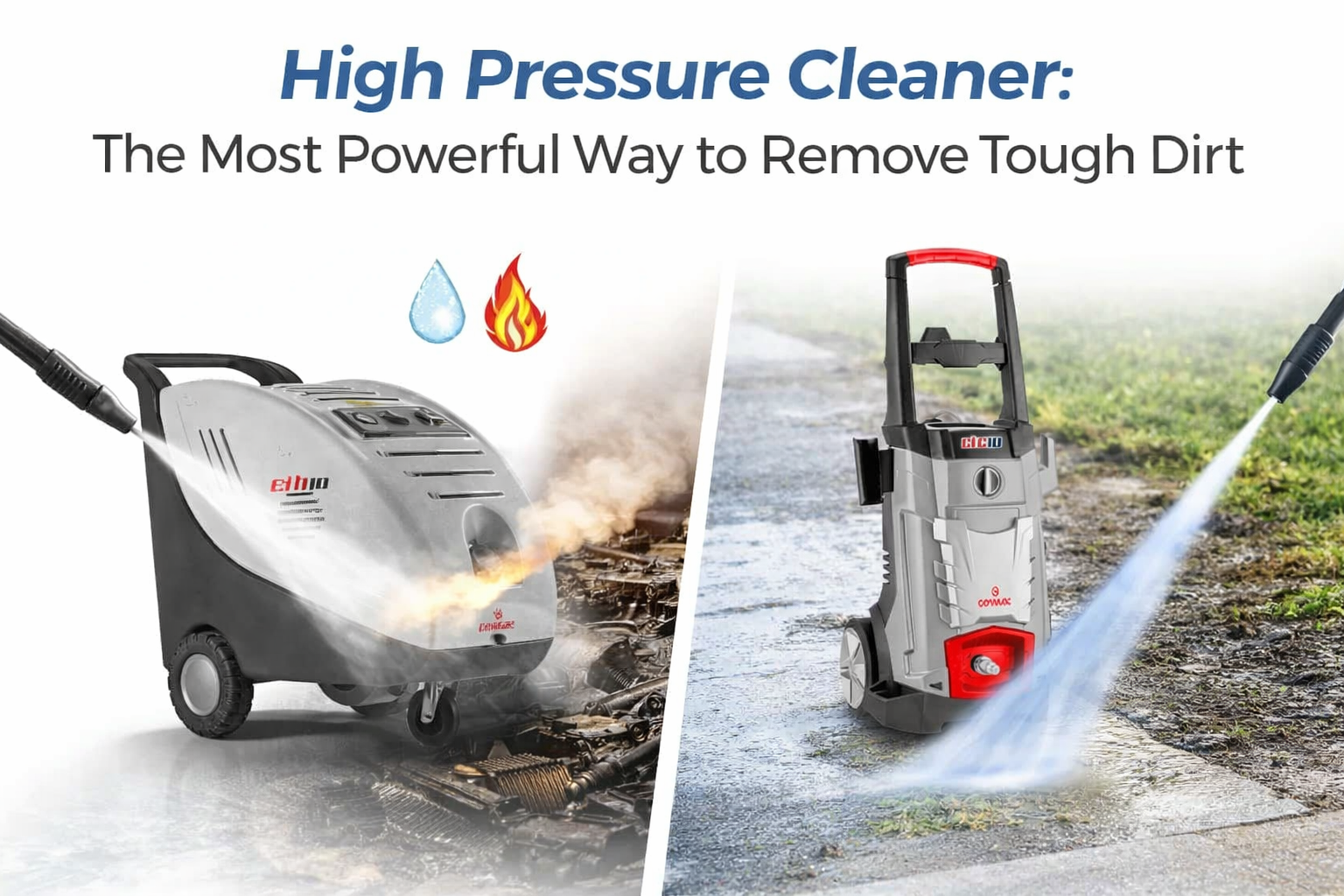
Typical use cases for hot water high pressure cleaner units
Choose a hot water unit when grease, oil, baked-on food, or hygiene-critical contamination is involved. Heat dissolves what pressure alone cannot.
Food plants, automotive bays, and heavy engineering floors gain the most from hot water cleaning.
When a Cold Water High Pressure Cleaner Is Enough
A cold water machine is sufficient whenever your soil is non-greasy and your hygiene standards are general rather than audit-driven. Paying extra for heat here adds no real value.
This suits cost-sensitive buyers who watch electricity and fuel bills closely. A commercial high pressure cleaner without a heating system runs cheaper and still handles most exterior cleaning.
Small workshops, residential complexes, and car washing centres often fall into this category. If you mainly rinse mud and dust off vehicles or pavements, cold water keeps your investment lean.
When Paying for a Hot Water High Pressure Cleaner Is Justified
The premium is justified when grease, oil, fats, or sanitation outcomes drive your cleaning. Heat delivers faster, deeper, and more hygienic results.
Industries that benefit most include food and beverage, pharma, automotive, heavy engineering, and logistics handling oily freight. In these settings, hot water saves time, cuts detergent costs, and improves sanitation.
Field example: An automotive workshop in Pune switched from cold to hot water for engine degreasing. Cleaning time per chassis dropped by nearly 40%, freeing technicians for billable repair work.
Field example: A food processing unit near Coimbatore upgraded to a hot water commercial high pressure cleaner for its production lines. Their next hygiene audit score rose sharply because heat removed fat residue that cold water had been leaving behind.
Calculating the Real Premium: Cost vs. Lifetime Value
A hot water high pressure cleaner typically costs more upfront and consumes fuel or extra power to heat water. Maintenance is slightly higher because of the heating coil and burner.
Yet lifetime value often favours hot water in greasy environments. Faster cleaning means less downtime, lower labour cost, and reduced detergent spend.
Consider a simple comparison. A cold water commercial high pressure cleaner may cost less to buy, but if your team spends two extra hours daily scrubbing oil, the labour adds up fast. A hot water model that halves that time can pay for its premium within a year.
Field example: A logistics hub in Bhiwandi cleaning oily pallet floors found cold water cleaning too slow during night shifts. A hot water unit reduced cleaning cycles, keeping loading bays ready faster each morning.
Choosing the Best High Pressure Cleaner for Your Facility
Assess your dirt profile and hygiene standards
Start by mapping what you actually clean. Greasy, oily, or audit-sensitive surfaces point to hot water; dry or loose soil points to cold.
Match the machine to the dirt, not to the highest spec available. The best high pressure cleaner is the one that fits your real workload.
Key specs to compare in 2026
Compare pressure, flow, temperature range, power source, accessories, safety features, and automation options. In India, also weigh electricity cost sensitivity and water availability when sizing your unit.
Look for safety cut-offs, thermal controls, and chemical-compatible hoses. See our checklist for comparing commercial high pressure cleaner models, and our guide to choosing the right high pressure cleaner before you finalise.
Suggested image alt text: "Maintenance technician operating a hot water high pressure cleaner on an oily factory floor in India."
Why Industrial Cleaning Equipment Manufacturers in India Matter
Reliable industrial cleaning equipment manufacturers in india do far more than sell machines. They help you choose correctly and keep the equipment running for years.
A good partner offers site assessment and on-floor demos so you test performance before buying. They handle installation and operator training to ensure safe, efficient use from day one.
Most importantly, established industrial cleaning equipment manufacturers in india maintain local service networks and spare-part availability. That means faster repairs, less downtime, and customisation for your specific industry and safety norms.
Conclusion: Making a Confident Decision in 2026
The decision logic is simple. Cold water is enough for dry, loose, or non-greasy dirt, while hot water is necessary wherever grease, oil, or strict hygiene rules apply.
The premium is absolutely justified when faster cleaning, lower labour, and better sanitation outweigh the extra cost. Always follow safety best practices: respect rated pressure and temperature limits, and handle chemicals as directed. Learn more in our guide to choosing the best high pressure cleaner for warehouses.
FAQs: High Pressure Cleaner Selection
1. How do I decide between a hot water and cold water high pressure cleaner for my factory?
Match the machine to your dirt profile. If you face grease, oil, or hygiene audits, choose hot water; for dust and mud, a cold water high pressure cleaner is enough.
2. Is a hot water high pressure cleaner worth the extra cost for grease and oil?
Yes, because heat dissolves grease faster and cuts labour time. The savings in detergent and downtime usually offset the premium within a year in oily environments.
3. What is the best high pressure cleaner type for a commercial car washing centre?
A cold water commercial high pressure cleaner is usually ideal. Most car wash dirt is mud and dust, so heat adds cost without meaningful benefit.
4. How often should I service a commercial high pressure cleaner in heavy-duty use?
Service every three to six months under heavy daily use. Regular checks of pumps, hoses, and heating coils prevent breakdowns and extend machine life.
5. Do industrial cleaning equipment manufacturers in india offer custom solutions for my industry?
Yes, experienced industrial cleaning equipment manufacturers in india provide industry-specific configurations. They tailor pressure, temperature, and accessories to your processes and safety norms.
6. Can I upgrade from a cold water to a hot water high pressure cleaner later?
In most cases you buy a separate hot water unit rather than retrofit. Discuss future needs early so your supplier can recommend a scalable high pressure cleaner plan.

Write a comment ...